Food & Nutrition
Why Your ‘Healthy’ Diet Isn’t Helping Your Gut
You changed what you eat — but not how your gut receives it.
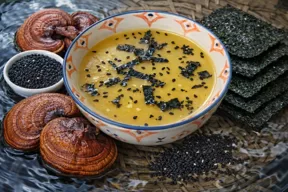
“Why Your ‘Healthy’ Diet Helps Your Labs… But Not Your Gut”
Most people start an anti‑inflammatory diet with the best intentions.
They add smoothies, berries, turmeric, raw veggies, and “clean” bowls.
And at first, something encouraging happens:
Their labs improve. Their weight drops. Their blood pressure and cholesterol look better.
This is real — and it’s motivating.
But it’s also only half the story.
Because for many people, something else begins to happen:
- bloating
- gas
- fullness after eating
- stomach or intestinal discomfort
- irregular bowel movements
- joints that don’t improve
- fatigue after meals
- a sense that their gut feels “off” even though they’re “eating healthy”
And they don’t understand why.
Here’s the part no one explains:
You changed what you eat, but not how your gut receives it.
Yes — removing processed foods, excess fats, and heavy meals will improve labs.
Yes — adding more plants and fiber will help your metabolism.
Yes — weight loss alone can shift your numbers in a positive direction.
But none of that automatically heals the digestive system.
In fact, for many people, the sudden increase in cold foods, raw ingredients, and high‑fiber blends actually overwhelms the gut.
From a modern perspective, this looks like:
- too much raw fiber too quickly
- slowed motility from cold foods
- fermentation from incomplete digestion
- microbiome disruption from overload rather than nourishment
From an East Asian medicine perspective, it looks like:
- cold accumulation
- Spleen/Stomach weakness
- digestive stagnation
- impaired transformation and transportation
Different languages, same experience.
Healthy ingredients don’t guarantee a healthy gut.
This is why so many people feel worse even while their labs look better.
The missing piece is this:
Your gut needs warmth, simplicity, and digestible forms to truly heal.
The foods that calm inflammation at the root are not the trendy ones.
They’re the traditional ones:
- warm teas
- broths
- porridges
- congee
- soups
- soft, warm, single‑bowl dishes
These forms:
- warm the digestive fire
- reduce the workload
- allow nutrients to be absorbed
- stabilize the microbiota
- calm inflammation
- support motility
- nourish without overwhelming
They create the internal environment where your gut can actually do its job — and feel good doing it.
So, if you’ve ever wondered why your “healthy” diet leaves you bloated, uncomfortable, or confused…
it might not be the ingredients.
It might be the form.
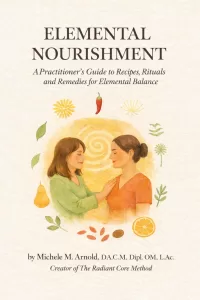
This is the heart of what I teach in my books:
how to choose foods and prepare them in ways that support your body’s internal climate, digestion, and healing — gently, warmly, and sustainably.
If you want to learn how to actually heal the gut — not just eat from a list — my books walk you through the forms, temperatures, and methods that make all the difference.
Introducing Elemental Nourishment
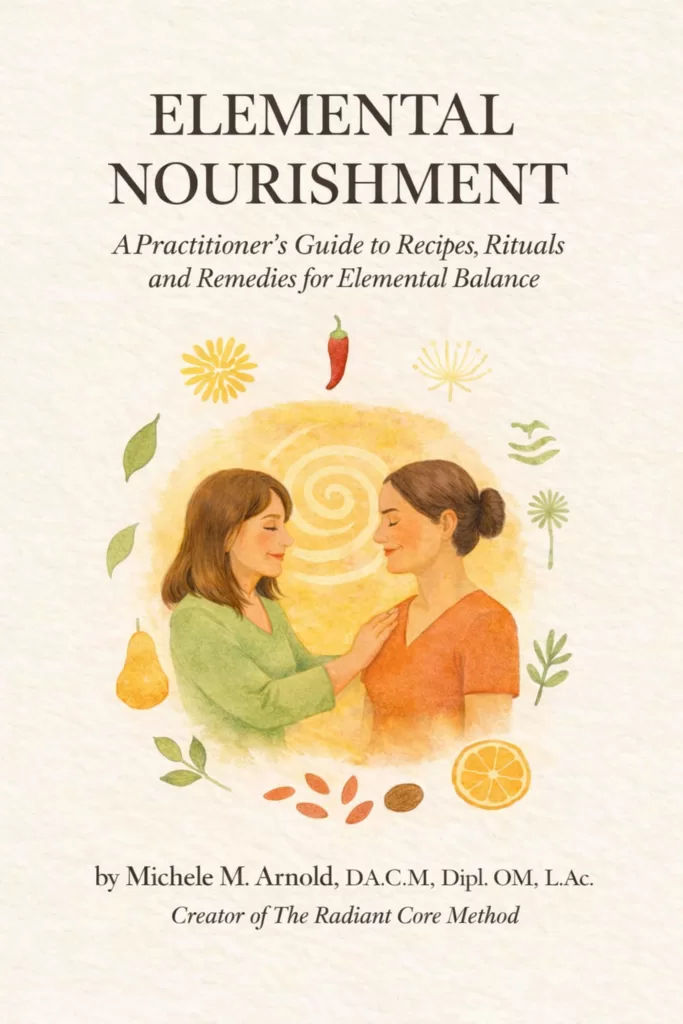 A Seasonal Path Back to Yourself
There are moments in life when the body asks us to slow down, listen more closely, and return to what is simple and true.
Elemental Nourishment was born from those moments — from years of clinical practice, personal healing, and the quiet wisdom of the seasons.
This book is a companion for anyone who wants to feel more grounded, more resilient, and more at home in their body. It blends East Asian medicine, food therapy, and seasonal living into a gentle, practical guide you can return to again and again.
What the Book Offers
Elemental Nourishment helps you reconnect with the rhythms that support digestion, mood, energy, and emotional steadiness. Inside, you’ll find:
• seasonal archetypes that explain how your body shifts throughout the year
• simple foods and recipes that restore balance
• rituals that calm the nervous system
• guidance for emotional clarity and resilience
• a way of eating that feels warm, intuitive, and deeply human
This is nourishment that goes beyond calories — it’s nourishment that supports your whole being.
A Taste of the Elemental Framework: The Metal Archetype
Each season carries its own emotional and physical signature.
The Metal element — associated with autumn — teaches us about clarity, boundaries, and the art of letting go.
When Metal is balanced, we feel:
• clear-minded
• steady
• able to release what no longer serves
• connected to our breath and inner rhythm
In the body, Metal governs the lungs, skin, and the cycles of inhaling and exhaling.
Through warm, supportive foods and simple daily rituals, we can strengthen this element and create more space inside ourselves.
This is just one of the five elemental archetypes explored in the book — each offering a doorway into deeper self-understanding.
Why I Wrote This Book
For years, I watched patients transform when they aligned their eating and living with the seasons.
Not through restriction.
Not through trends.
But through warmth, rhythm, and the wisdom of nature.
I wrote Elemental Nourishment to bring that healing into your home — in a way that feels accessible, comforting, and beautifully simple.
If This Speaks to You
You can explore the book, see sample pages, and learn more here:
May this book be a gentle companion on your path toward feeling better in your body, your mind, and your life.
With warmth and gratitude,
Dr. Michele M. Arnold, D.A.C.M., Dipl. OM., L.Ac.
When Your Next Meal is Part of the Treatment Plan
For many chronic health issues, everyday exposures matter most. Food isn’t only fuel. It’s raw material, signaling molecules, and a daily set of “instructions” your body reads repeatedly.
The idea of food as medicine isn’t new. It shows up in traditional healing systems, in public health, and increasingly in modern clinical research. The most useful way to think about it today is practical and evidence-based:
- Food can reduce risk (primary prevention).
- Food can support treatment alongside medical care (adjunct therapy).
- Food can change symptoms by affecting inflammation, blood pressure, lipids, glucose, the gut microbiome, and even brain signaling.
It won’t replace necessary medications or procedures. But in many cases, it can meaningfully shift the trajectory of health and sometimes quickly. continue reading